



上一篇 汤筠
田元贺 下一篇
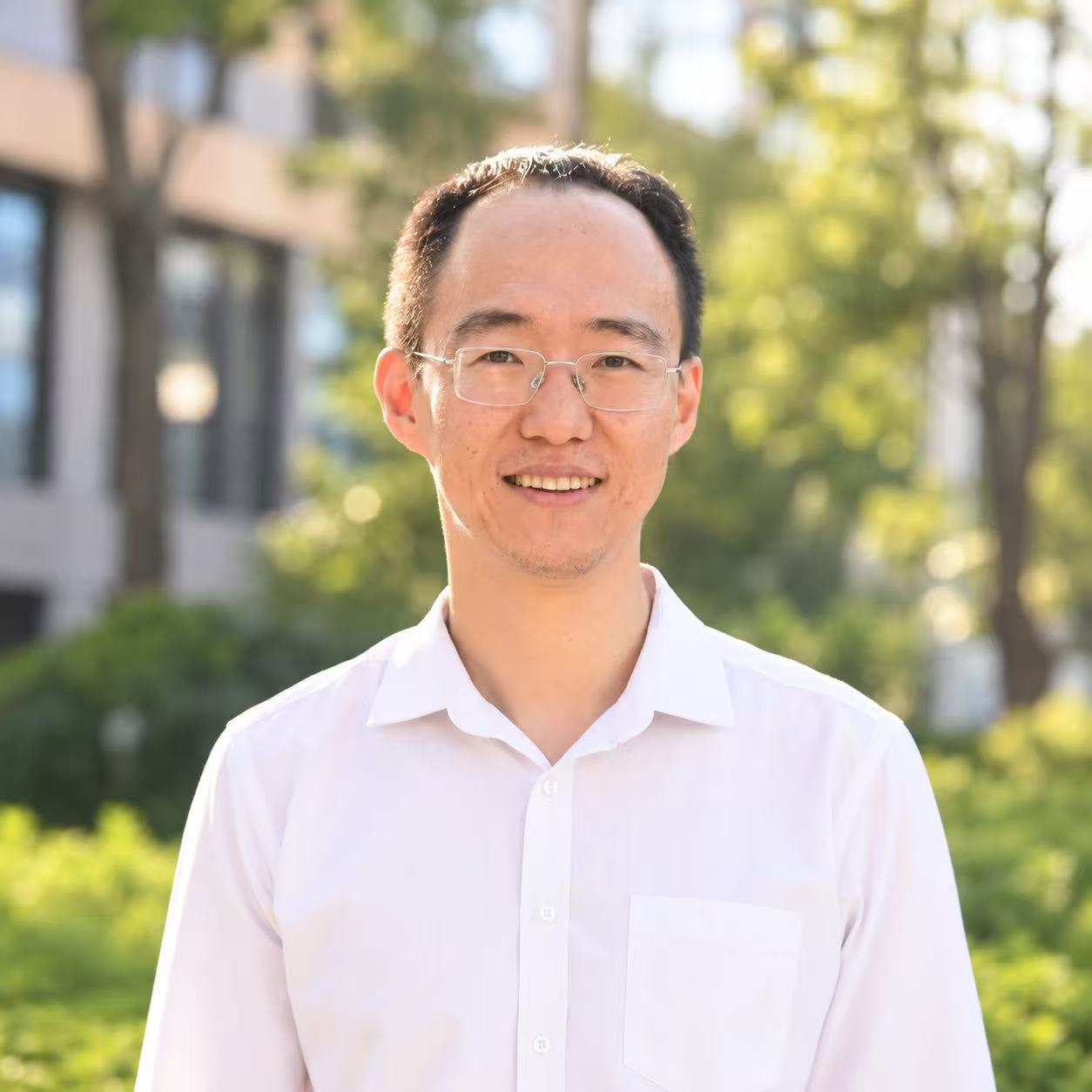
北京中关村学院导师
I. 研究方向
研究聚焦下一代主动智能,以大模型为技术基础,以自主智能体为核心,面向数字世界与物理世界中的感知、推理、决策和行动,重点开展以下研究:
1. 大语言模型与多模态基础模型(LLM & Multimodal Foundation Models)
大模型预训练与后训练、多模态理解与生成、推理能力增强、模型训练与推理优化。
2. 自主智能体与强化学习(AI Agents & Reinforcement Learning)
智能体推理与规划、工具学习与使用、长程任务执行、强化学习、多智能体协同。
3. 主动智能与自主决策(Proactive AI & Autonomous Decision-Making)
持续环境感知、主动任务发现、介入时机决策、因果推理、自主规划与行动。
4. 具身智能与世界模型(Embodied AI & World Models)
物理世界理解、世界模型、机器人任务规划、人机交互与协同、跨设备智能行动。
II. 个人经历
观行数智|创始人兼董事长(2026年至今)
创立观行数智,聚焦下一代主动式物理AI,研发面向机器人与智能终端的主动智能模型与系统。
华为|首席AI专家
负责小艺大模型核心技术研发、模型训练及技术迭代,推动多模态大模型在智能终端中的规模化落地。
腾讯|专家研究员
从事自然语言处理、预训练语言模型、文本生成及智能助手等方向的研究与应用。
微软亚洲研究院|研究员
从事自然语言理解、机器推理与代码智能研究,参与和主导 CodeBERT、GraphCodeBERT 等系列代表性工作。
哈尔滨工业大学|博士
主要研究方向为自然语言处理、深度学习与语言理解。
III. 代表性论文
2026年
1. HardcoreLogic: Challenging Large Reasoning Models with Long-tail Logic Puzzle Games. ICLR 2026.
2. Not All Models Suit Expert Offloading: On Local Routing Consistency of Mixture-of-Expert Models. ICLR 2026.
3. SWE Data Construction, Automatically! FSE 2026 / Proceedings of the ACM on Software Engineering, 3(FSE): 525–546.
4. LangGPS: Language Separability Guided Data Pre-Selection for Joint Multilingual Instruction Tuning. AAAI 2026.
5. Exploring Cross-Lingual Latent Transplantation: Mutual Opportunities and Open Challenges. IEEE/ACM Transactions on Audio, Speech, and Language Processing, 2026.
2025年
1. Is PRM Necessary? Problem-Solving RL Implicitly Induces PRM Capability in LLMs. NeurIPS 2025.
2. ToolACE: Winning the Points of LLM Function Calling. ICLR 2025.
3. Mixture of Lookup Experts. ICML 2025.
4. CLAIM: Mitigating Multilingual Object Hallucination in Large Vision-Language Models with Cross-Lingual Attention Intervention. ACL 2025.
5. iTool: Reinforced Fine-Tuning with Dynamic Deficiency Calibration for Advanced Tool Use. EMNLP 2025.
2024年
1. Kangaroo: Lossless Self-Speculative Decoding for Accelerating LLMs via Double Early Exiting. NeurIPS 2024.
2. Android in the Zoo: Chain-of-Action-Thought for GUI Agents. Findings of EMNLP 2024.
3. Learning Fine-Grained Grounded Citations for Attributed Large Language Models. Findings of ACL 2024.
4. SkillNet-X: A Multilingual Multitask Model with Sparsely Activated Skills. ICASSP 2024.
2023年
1. STOA-VLP: Spatial-Temporal Modeling of Object and Action for Video-Language Pre-training. AAAI 2023.
2. Improved Visual Story Generation with Adaptive Context Modeling. Findings of ACL 2023.
3. Effidit: An Assistant for Improving Writing Efficiency. ACL System Demonstrations 2023.
4. Skillnet-NLG: General-Purpose Natural Language Generation with a Sparsely Activated Approach. ICASSP 2023.
2022年
1. scBERT as a Large-Scale Pretrained Deep Language Model for Cell Type Annotation of Single-Cell RNA-seq Data. Nature Machine Intelligence, 2022.
2. Exploring and Adapting Chinese GPT to Pinyin Input Method. ACL 2022.
3. Analytical Reasoning of Text. Findings of NAACL 2022.
4. Logic-Driven Context Extension and Data Augmentation for Logical Reasoning of Text. Findings of ACL 2022.
5. Is Whole Word Masking Always Better for Chinese BERT? Probing on Chinese Grammatical Error Correction. Findings of ACL 2022.
2021年
1. GraphCodeBERT: Pre-training Code Representations with Data Flow. ICLR 2021.
2. CodeXGLUE: A Machine Learning Benchmark Dataset for Code Understanding and Generation. NeurIPS Datasets and Benchmarks 2021.
3. K-Adapter: Infusing Knowledge into Pre-Trained Models with Adapters. Findings of ACL 2021.
4. CoSQA: 20,000+ Web Queries for Code Search and Question Answering. ACL 2021.
5. WhiteningBERT: An Easy Unsupervised Sentence Embedding Approach. Findings of EMNLP 2021.
2020年
1. CodeBERT: A Pre-Trained Model for Programming and Natural Languages. Findings of EMNLP 2020.
2. CodeBLEU: a Method for Automatic Evaluation of Code Synthesis. arXiv, 2020.
3. Graph-Based Reasoning over Heterogeneous External Knowledge for Commonsense Question Answering. AAAI 2020.
4. Evidence-Aware Inferential Text Generation with Vector Quantised Variational AutoEncoder. ACL 2020.
5. LogicalFactChecker: Leveraging Logical Operations for Fact Checking with Graph Module Network. ACL 2020.
2019年
1. Coupling Retrieval and Meta-Learning for Context-Dependent Semantic Parsing. ACL 2019.
2. Asking Clarification Questions in Knowledge-Based Question Answering. EMNLP 2019.
3. Multi-Task Learning for Conversational Question Answering over a Large-Scale Knowledge Base. EMNLP 2019.
4. Text Generation From Tables. IEEE/ACM Transactions on Audio, Speech, and Language Processing, 2019.
2018年
1. Dialog-to-Action: Conversational Question Answering Over a Large-Scale Knowledge Base. NeurIPS 2018.
2. Learning to Collaborate for Question Answering and Asking. NAACL 2018.
3. Semantic Parsing with Syntax- and Table-Aware SQL Generation. ACL 2018.
4. Assertion-Based QA With Question-Aware Open Information Extraction. AAAI 2018.
2017年
1. Question Generation for Question Answering. EMNLP 2017.
2016年
1. Aspect Level Sentiment Classification with Deep Memory Network. EMNLP 2016.
2. Effective LSTMs for Target-Dependent Sentiment Classification. COLING 2016.
3. A Language-Independent Neural Network for Event Detection. ACL 2016.
2015年
1. Sentiment-Specific Representation Learning for Document-Level Sentiment Analysis. WSDM 2015.
2. Learning Semantic Representations of Users and Products for Document Level Sentiment Classification. ACL 2015.
3. Document Modeling with Gated Recurrent Neural Network for Sentiment Classification. EMNLP 2015.
4. User Modeling with Neural Network for Review Rating Prediction. IJCAI 2015.
2014年
1. Learning Sentiment-Specific Word Embedding for Twitter Sentiment Classification. ACL 2014.
2. A Joint Segmentation and Classification Framework for Sentiment Analysis. EMNLP 2014.
3. Adaptive Recursive Neural Network for Target-dependent Twitter Sentiment Classification. ACL 2014.